Future HMI Concept

Developing a visual language for future automotive prototypes

Duration

6 months

Made with

Icon Incar

Stakeholder

Honda

Industry

Automotive

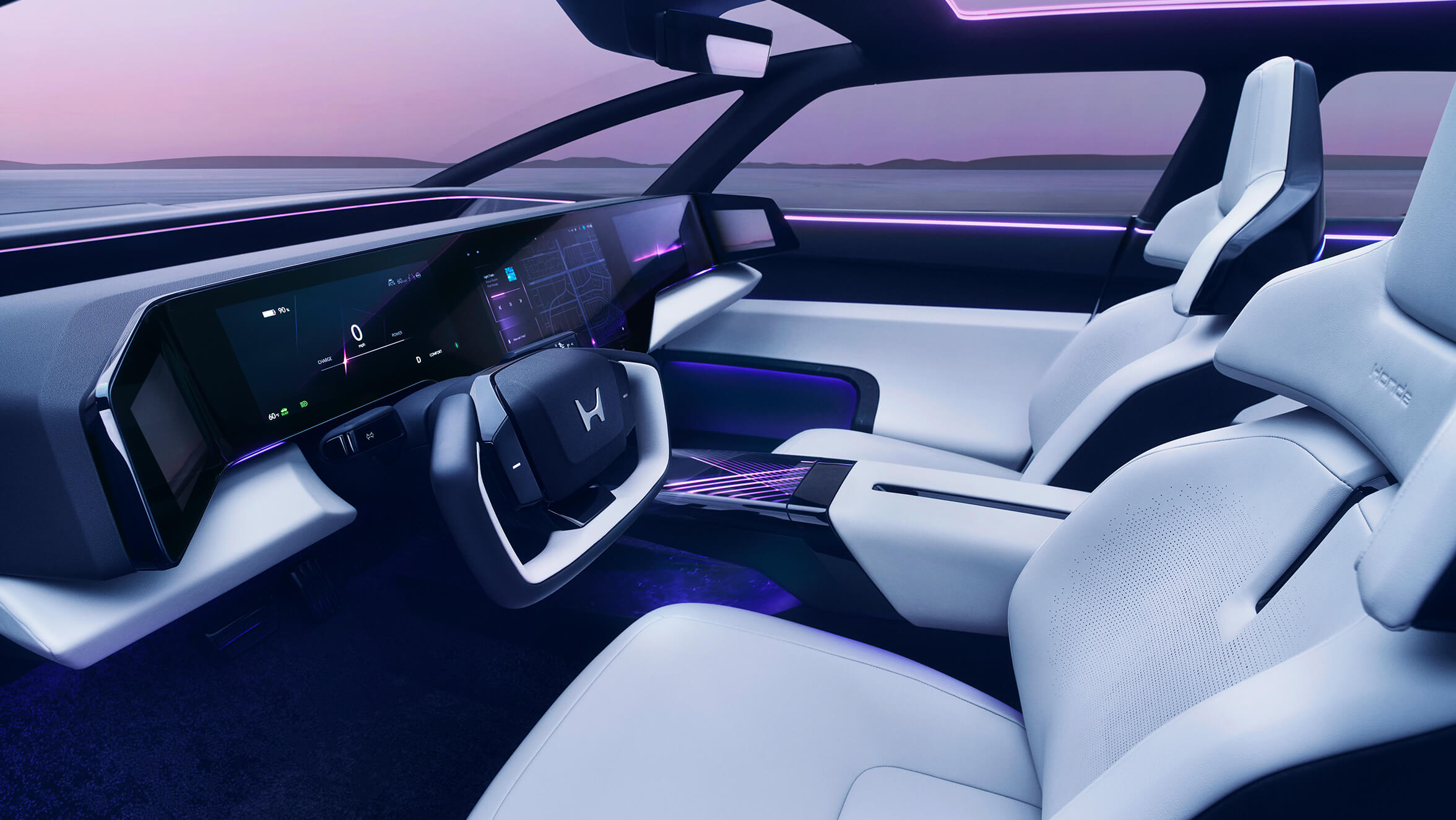
In automotive contexts, visual concepts are not meant to define final solutions, but to explore possible directions. When working on future prototypes, design becomes a strategic tool to test languages, principles, and assumptions before they are constrained by platforms and production requirements. This project focused on exploring and visualizing potential HMI directions for Hondas future vehicles.

Future HMI Concept

Developing a visual language for future automotive prototypes

Duration

6 months

Made with

Icon Incar

Stakeholder

Honda

Industry

Automotive

In automotive contexts, visual concepts are not meant to define final solutions, but to explore possible directions. When working on future prototypes, design becomes a strategic tool to test languages, principles, and assumptions before they are constrained by platforms and production requirements. This project focused on exploring and visualizing potential HMI directions for Hondas future vehicles.

Future HMI Concept

Developing a visual language for future automotive prototypes

Duration

6 months

Made with

Icon Incar

Stakeholder

Honda

Industry

Automotive

In automotive contexts, visual concepts are not meant to define final solutions, but to explore possible directions. When working on future prototypes, design becomes a strategic tool to test languages, principles, and assumptions before they are constrained by platforms and production requirements. This project focused on exploring and visualizing potential HMI directions for Hondas future vehicles.

Context

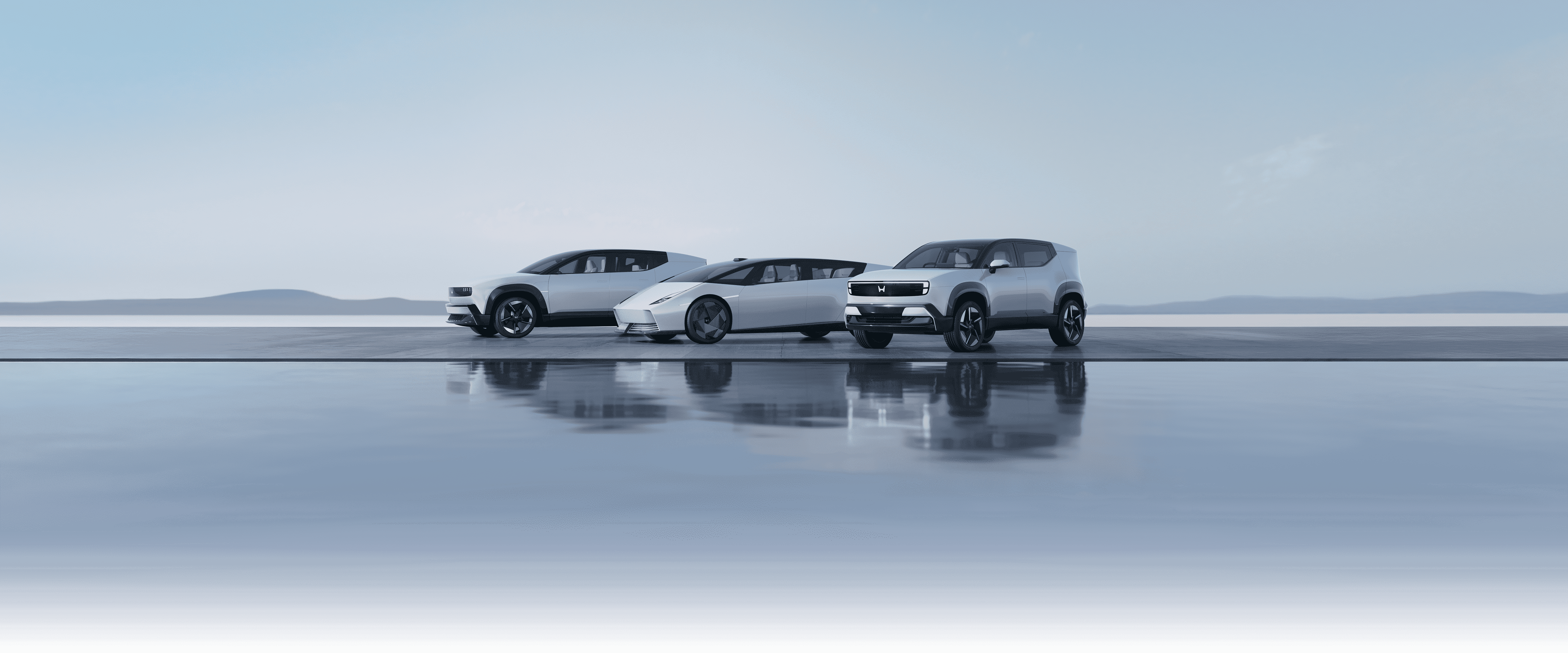
Honda is actively exploring new scenarios of mobility, interaction, and technology for the next generations of vehicles, as presented through its future-facing concepts and research initiatives on 0.honda. Within this context, Icon Incar was involved to develop and present visual HMI concepts capable of representing plausible future interface languages, unconstrained by current hardware, platforms, or production limitations. The goal was not to define a production-ready system, but to explore directions aligned with Honda’s brand values and long-term technological vision.

The real problem

The main challenge was to give form to a credible future-facing visual language, without falling into purely aesthetic exercises or solutions too closely tied to today’s constraints.

In a concept context, every design decision needs to be concrete enough to feel believable, yet open enough to leave room for future research and development.

My Role

I worked as a Senior UI Designer at Icon Incar, responsible for developing and carrying forward one of the proposed visual languages for Honda’s future HMI concepts.

My contribution focused on defining visual principles, hierarchy, typography, color, and interface treatment, translating strategic and brand inputs into a coherent and recognizable direction.

The work centered on building a solid visual language capable of supporting multiple scenarios while clearly expressing a vision for the future in-car experience.

Context

Honda is actively exploring new scenarios of mobility, interaction, and technology for the next generations of vehicles, as presented through its future-facing concepts and research initiatives on 0.honda. Within this context, Icon Incar was involved to develop and present visual HMI concepts capable of representing plausible future interface languages, unconstrained by current hardware, platforms, or production limitations. The goal was not to define a production-ready system, but to explore directions aligned with Honda’s brand values and long-term technological vision.

The real problem

The main challenge was to give form to a credible future-facing visual language, without falling into purely aesthetic exercises or solutions too closely tied to today’s constraints.

In a concept context, every design decision needs to be concrete enough to feel believable, yet open enough to leave room for future research and development.

My Role

I worked as a Senior UI Designer at Icon Incar, responsible for developing and carrying forward one of the proposed visual languages for Honda’s future HMI concepts.

My contribution focused on defining visual principles, hierarchy, typography, color, and interface treatment, translating strategic and brand inputs into a coherent and recognizable direction.

The work centered on building a solid visual language capable of supporting multiple scenarios while clearly expressing a vision for the future in-car experience.

Context

Honda is actively exploring new scenarios of mobility, interaction, and technology for the next generations of vehicles, as presented through its future-facing concepts and research initiatives on 0.honda. Within this context, Icon Incar was involved to develop and present visual HMI concepts capable of representing plausible future interface languages, unconstrained by current hardware, platforms, or production limitations. The goal was not to define a production-ready system, but to explore directions aligned with Honda’s brand values and long-term technological vision.

The real problem

The main challenge was to give form to a credible future-facing visual language, without falling into purely aesthetic exercises or solutions too closely tied to today’s constraints.

In a concept context, every design decision needs to be concrete enough to feel believable, yet open enough to leave room for future research and development.

My Role

I worked as a Senior UI Designer at Icon Incar, responsible for developing and carrying forward one of the proposed visual languages for Honda’s future HMI concepts.

My contribution focused on defining visual principles, hierarchy, typography, color, and interface treatment, translating strategic and brand inputs into a coherent and recognizable direction.

The work centered on building a solid visual language capable of supporting multiple scenarios while clearly expressing a vision for the future in-car experience.

Concept

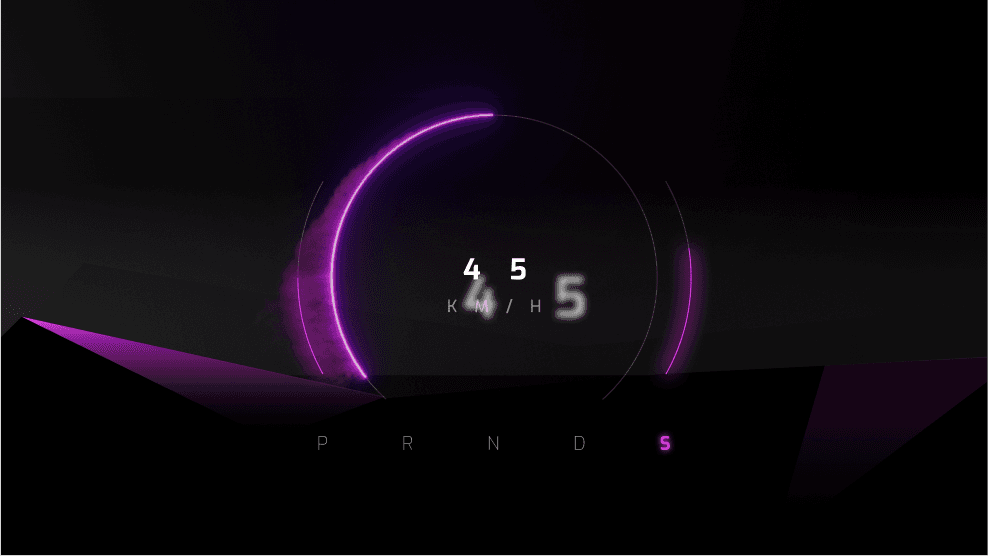
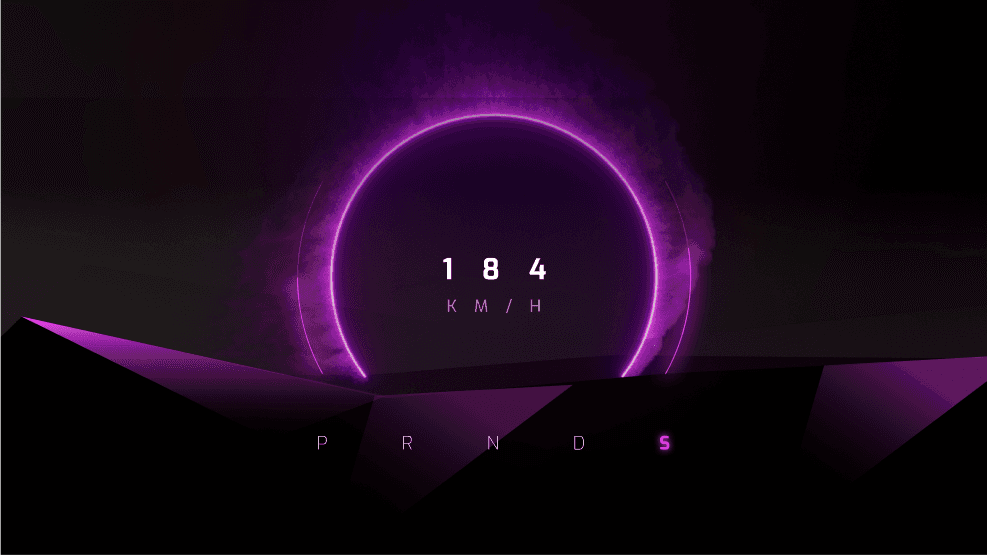
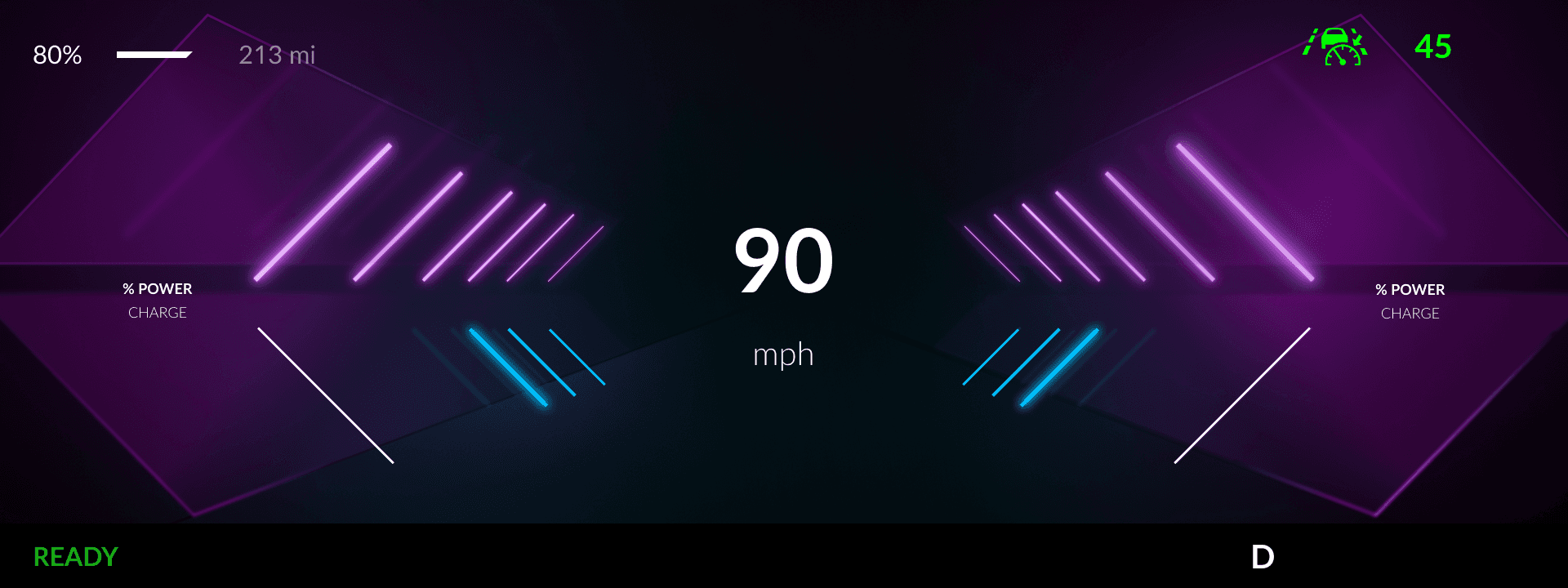
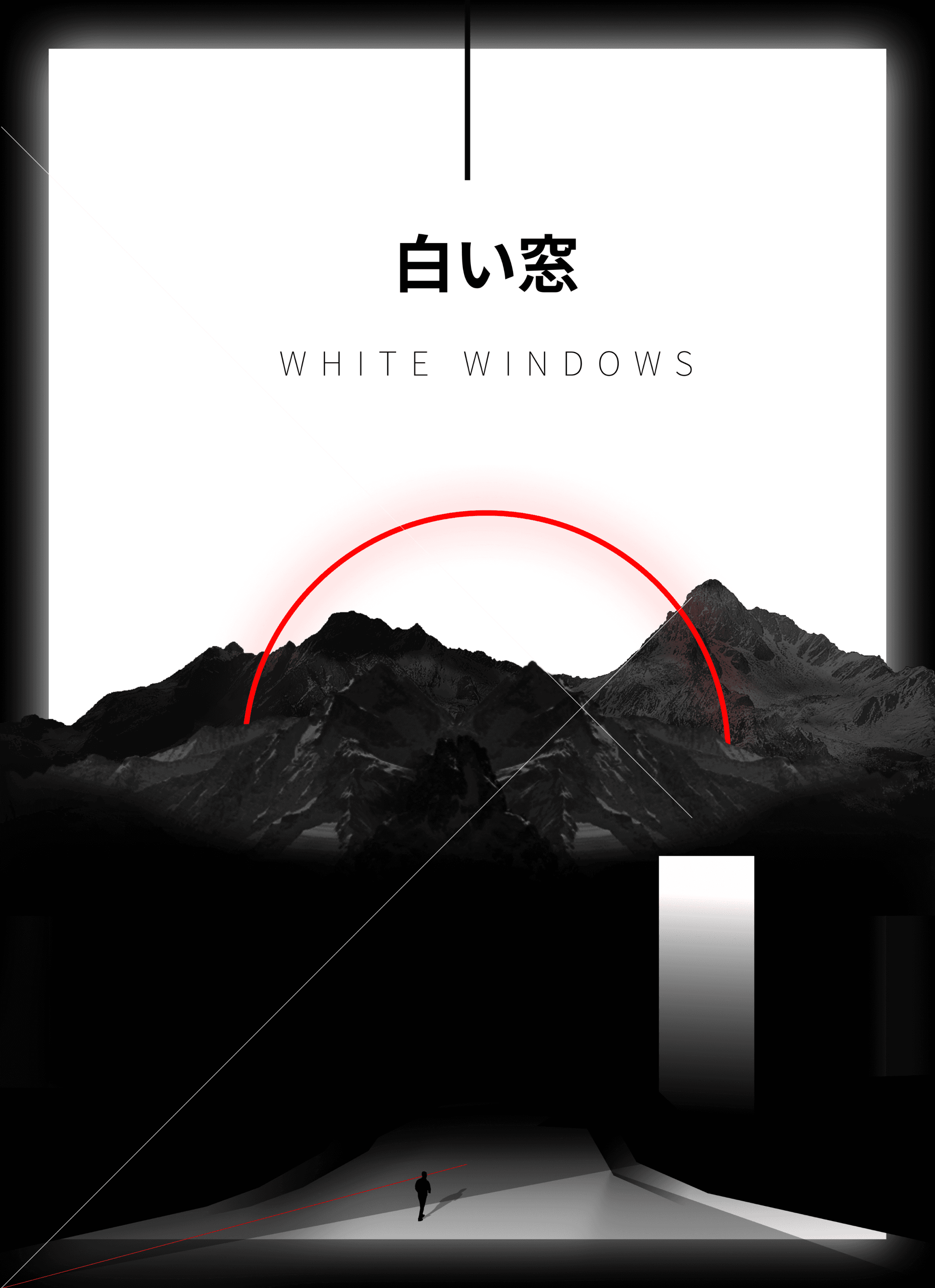
The initial concept for this HMI UI design project was inspired by a futuristic cyberpunk landscape that blends minimalism with cutting-edge technology. Drawing from the neon-lit, high-tech aesthetics of cyberpunk, the design aims to create a visually striking yet user-friendly interface that immerses the driver in a futuristic environment. The challenge was to balance dynamic, high-tech visuals with the practicality required in a car dashboard, ensuring all vital information was immediately accessible without overwhelming the user.
From Visual Exploration to 3D Renderings

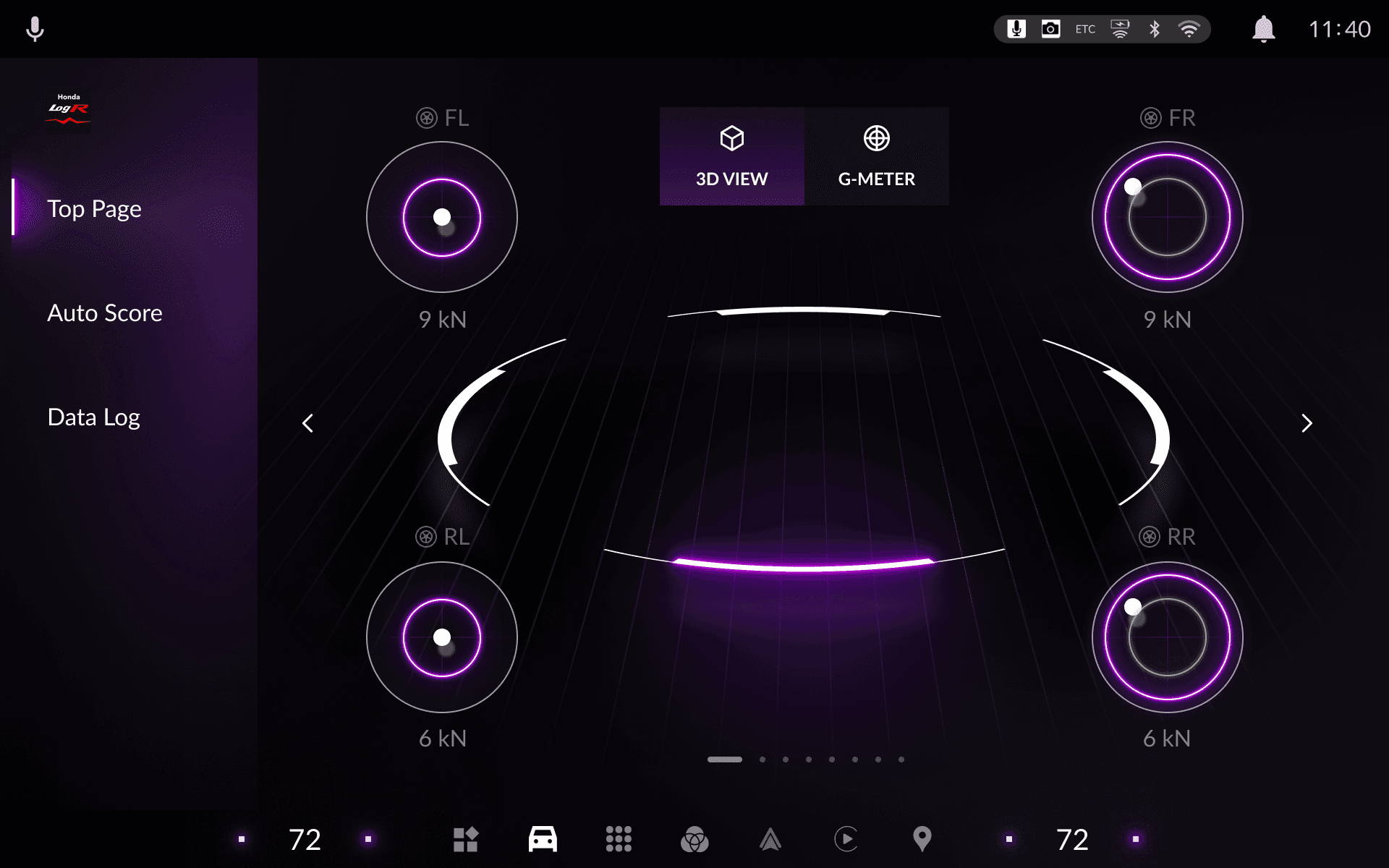
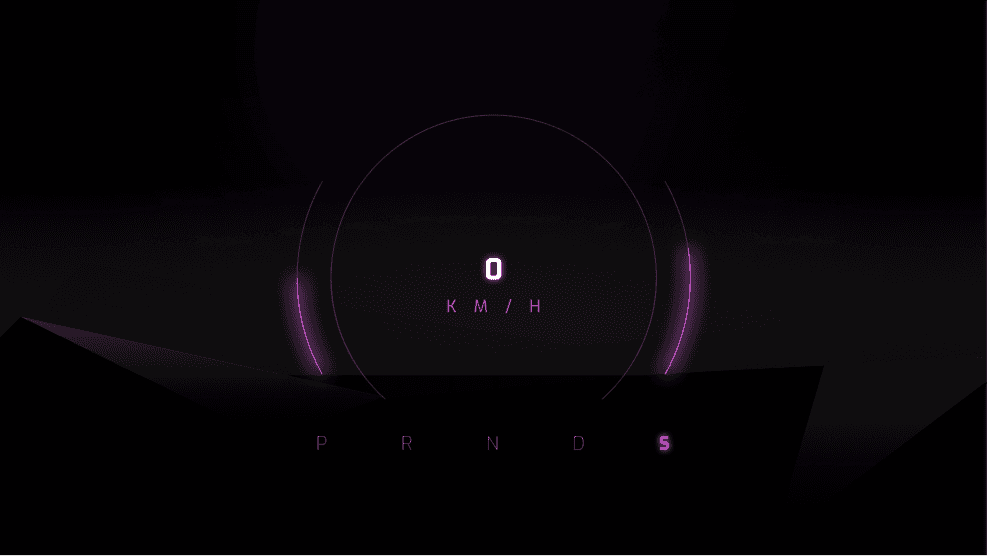
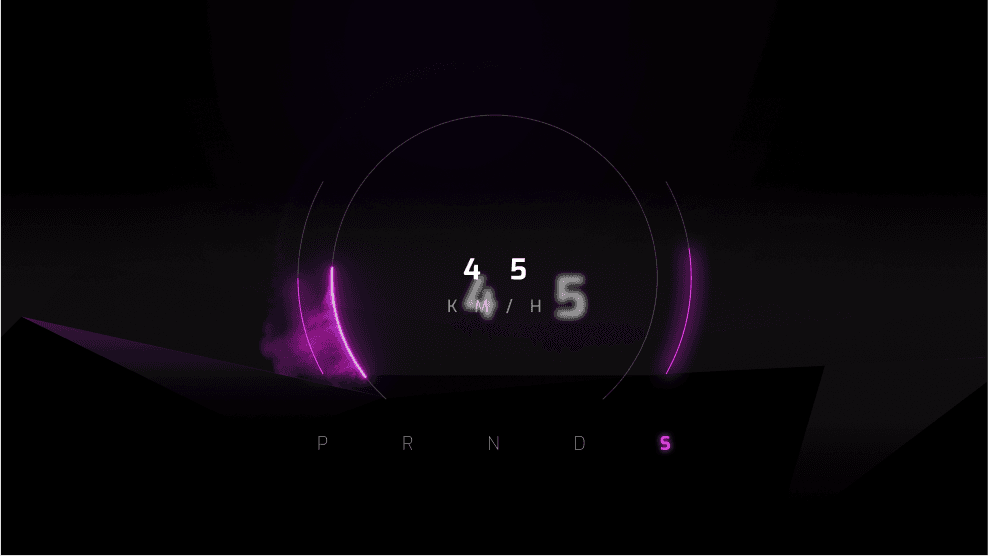
The visual exploration focused on blending neon gradients with dark backgrounds, experimenting with light effects to convey the vehicle's advanced technology. 3D renderings simulated reflective surfaces and dynamic lighting to set the tone for the final screens.

Convergence in the final style

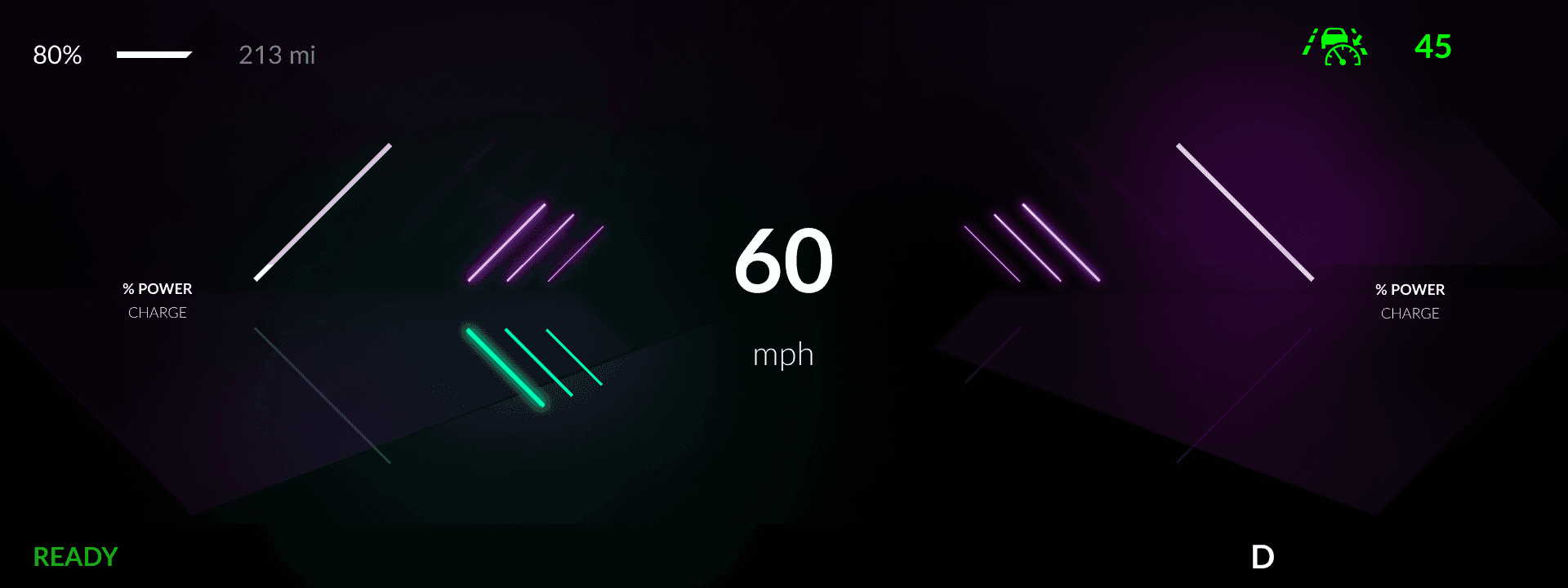
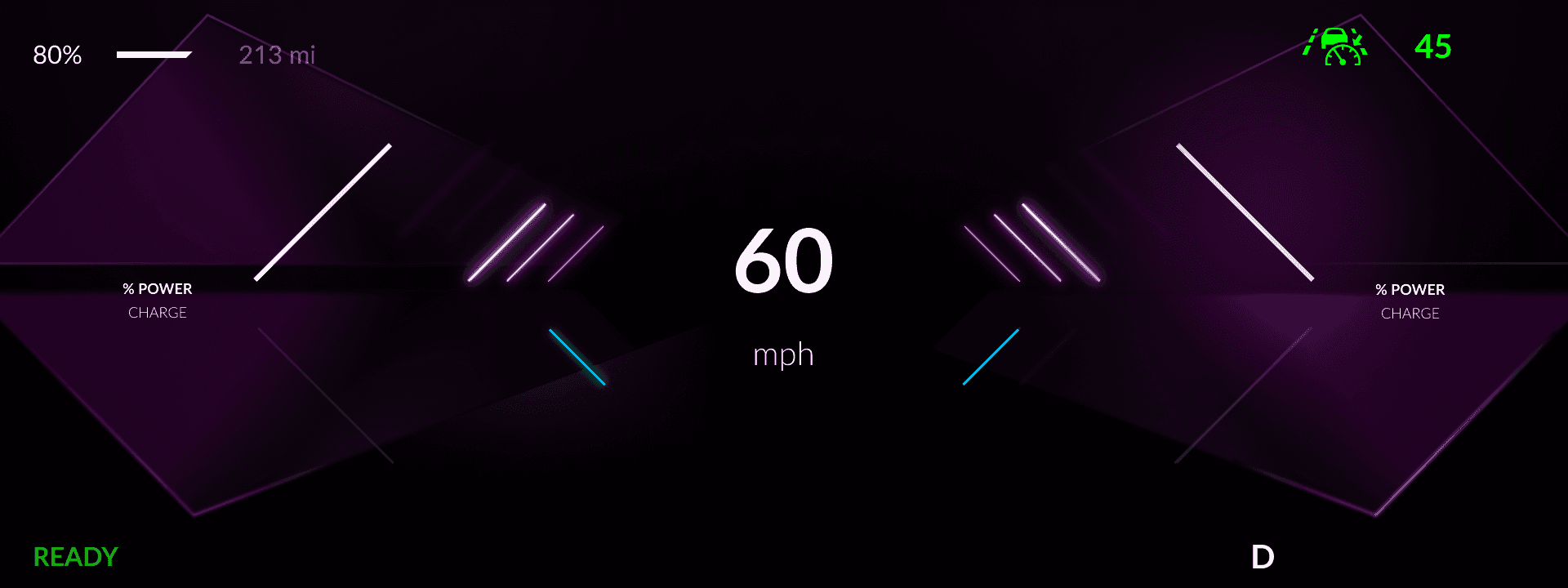
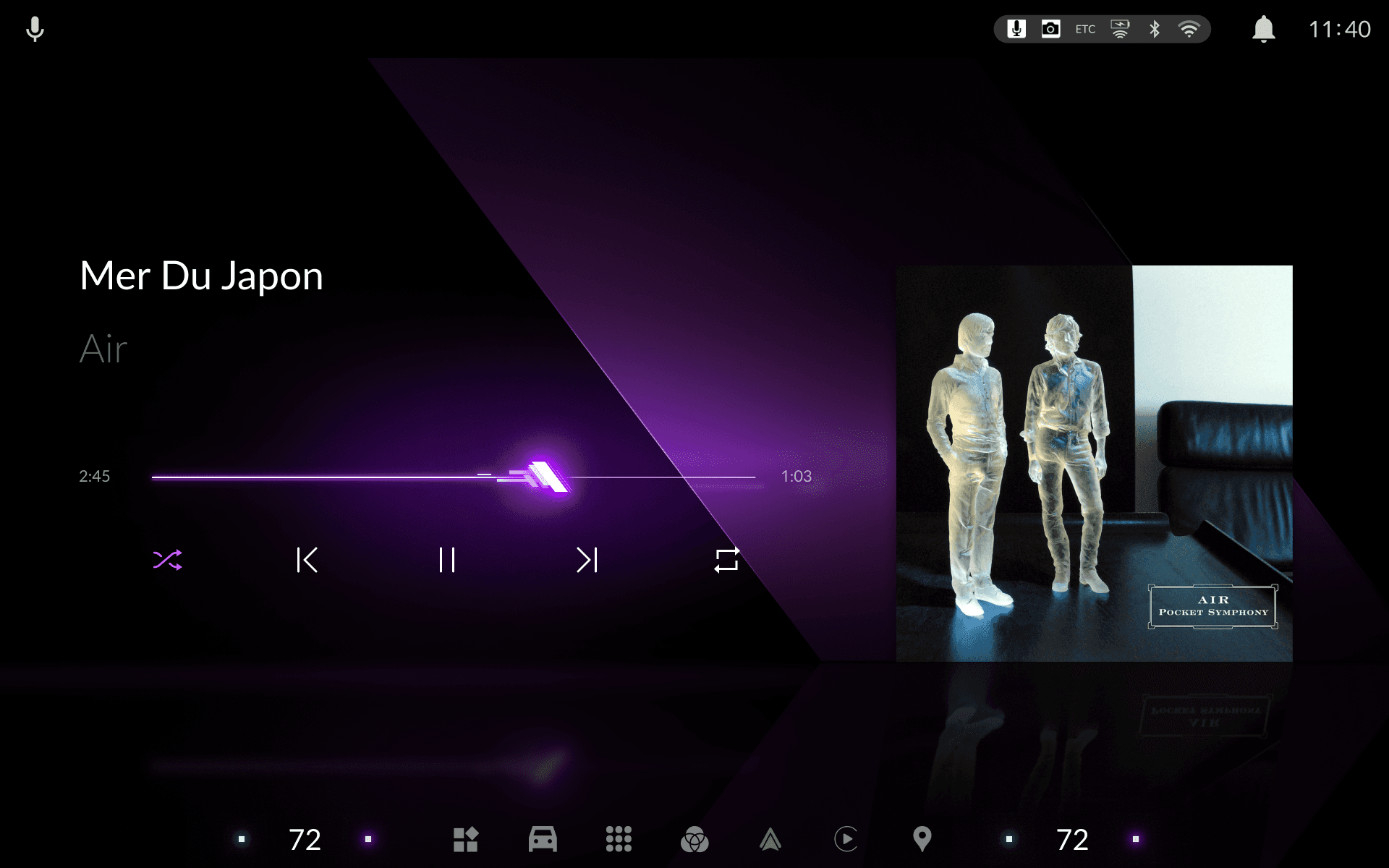
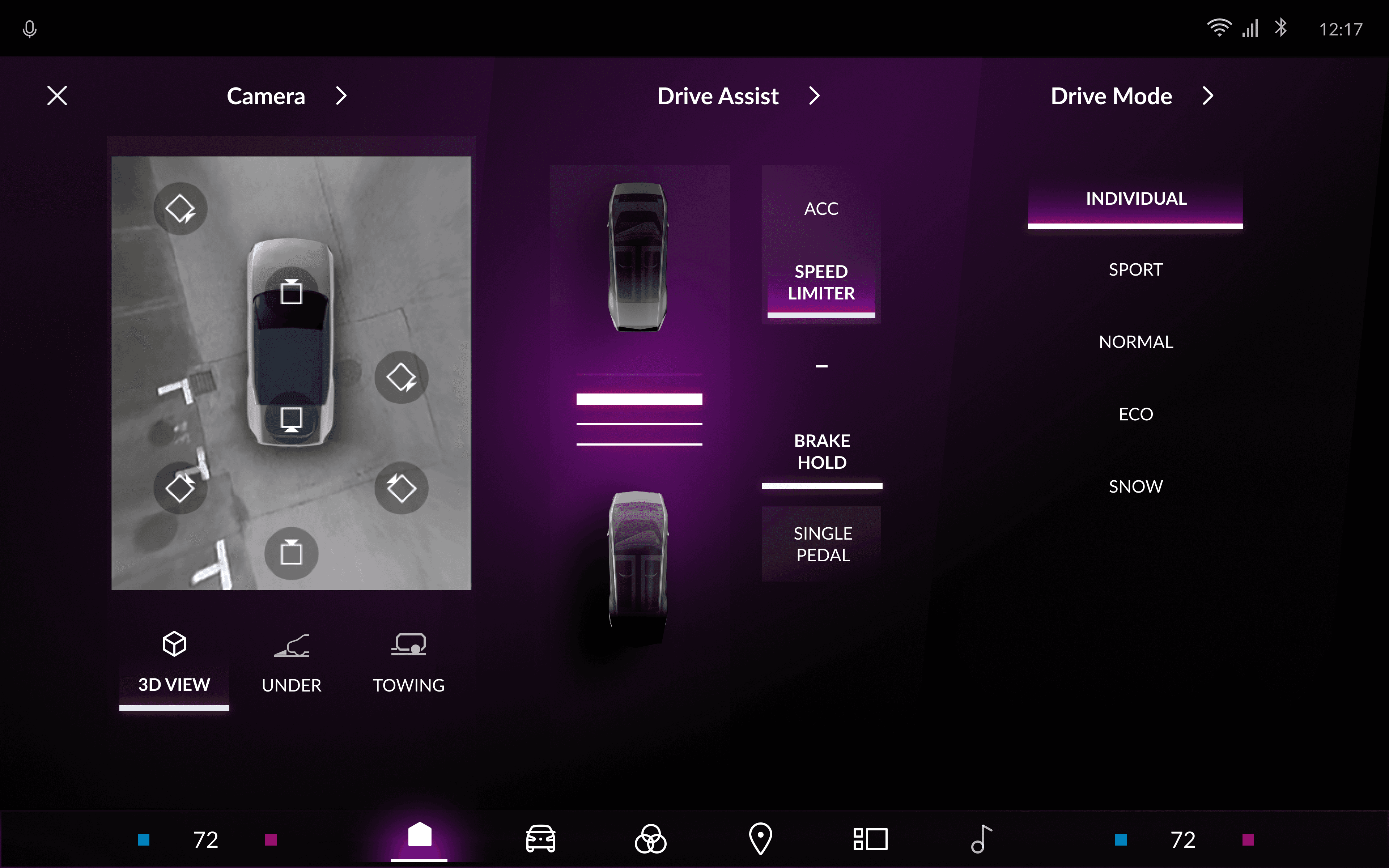
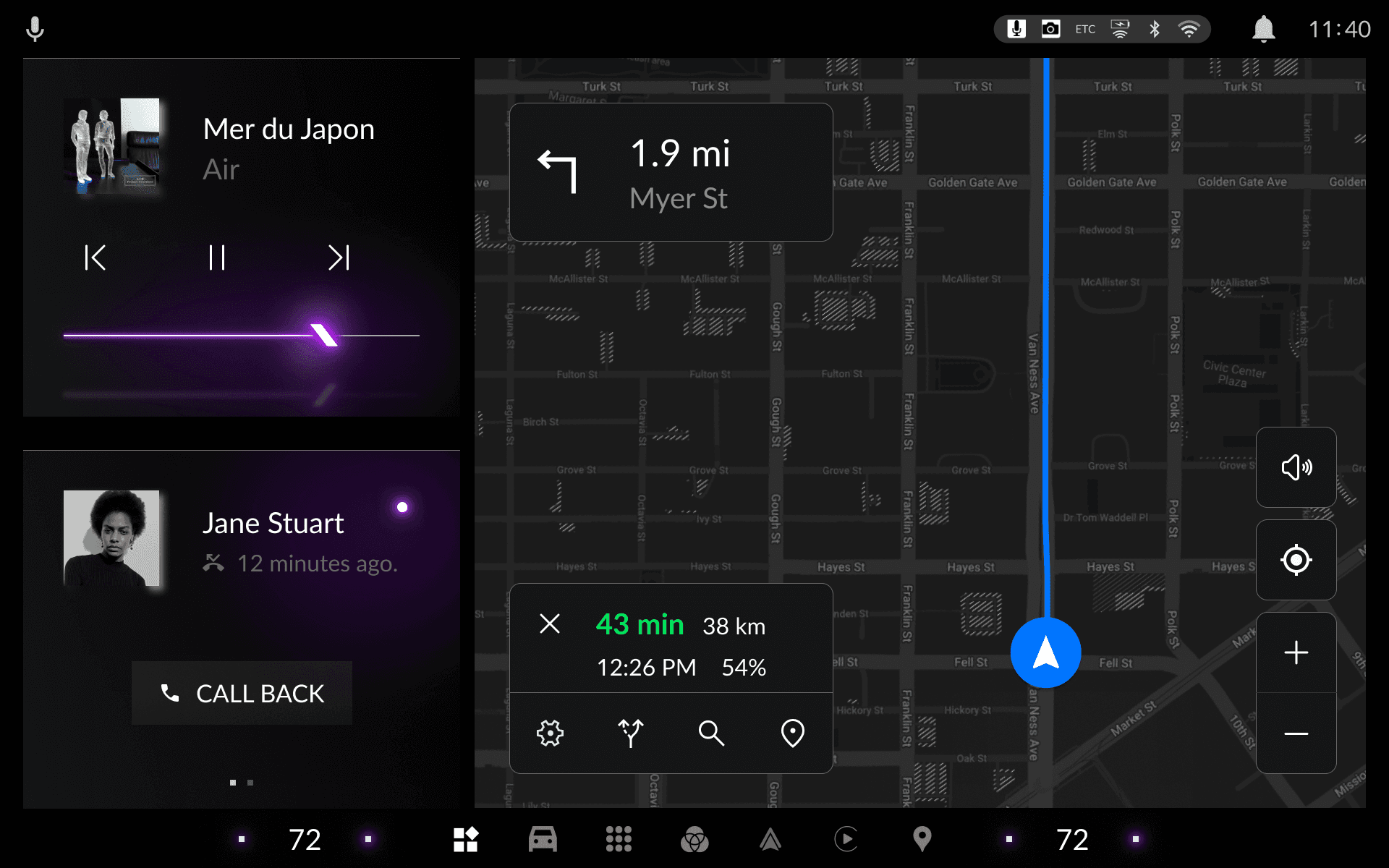
The design elements converged into a cohesive visual style, blending sleek neon lighting, dynamic gradients, and modern typography. Consistency was key, with each screen seamlessly integrating into the overall aesthetic, ensuring a balanced, user-friendly experience. The interface now exudes both advanced technology and a futuristic ambiance, aligning perfectly with the vehicle's identity.
Designing Final Screens

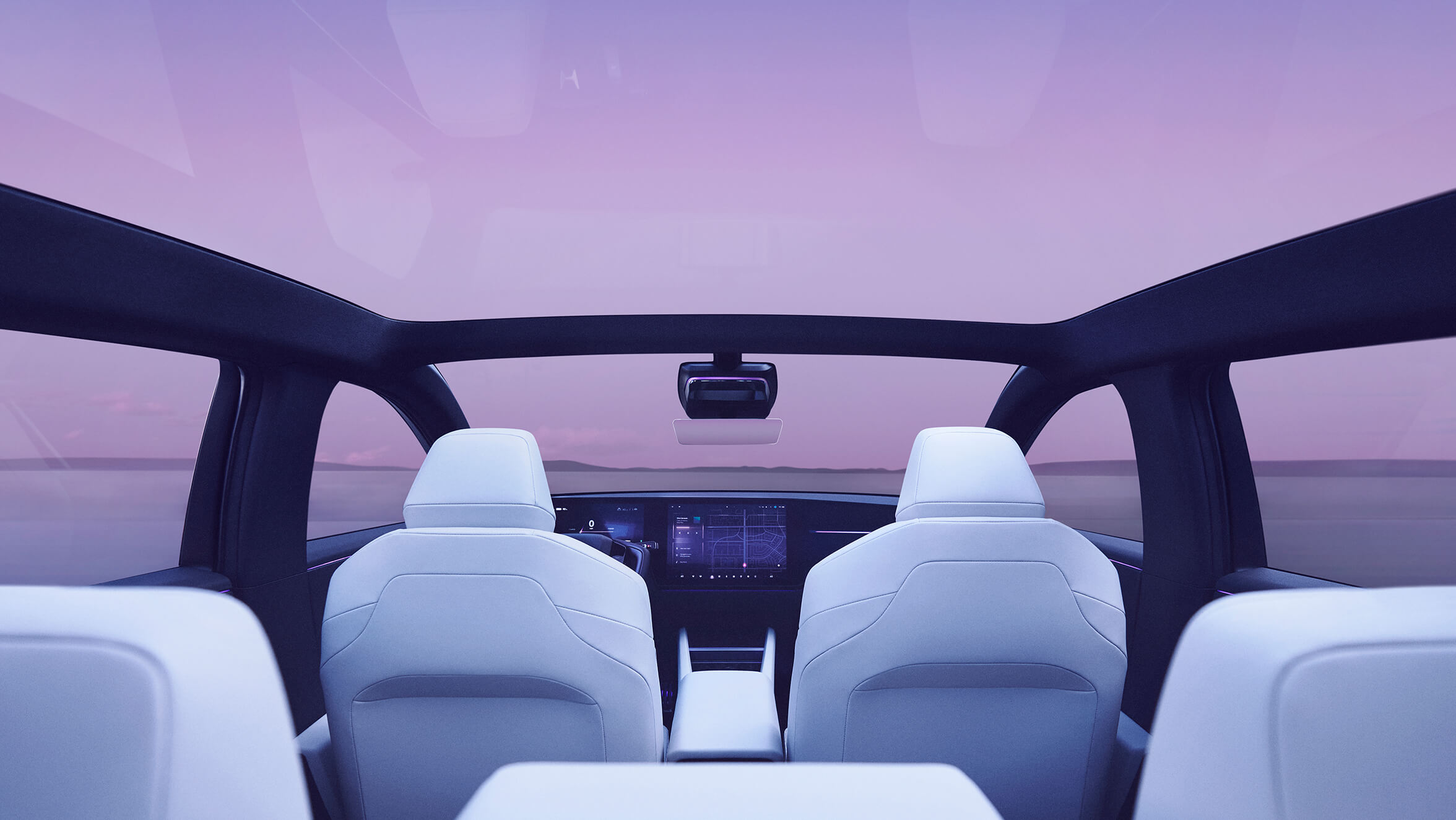
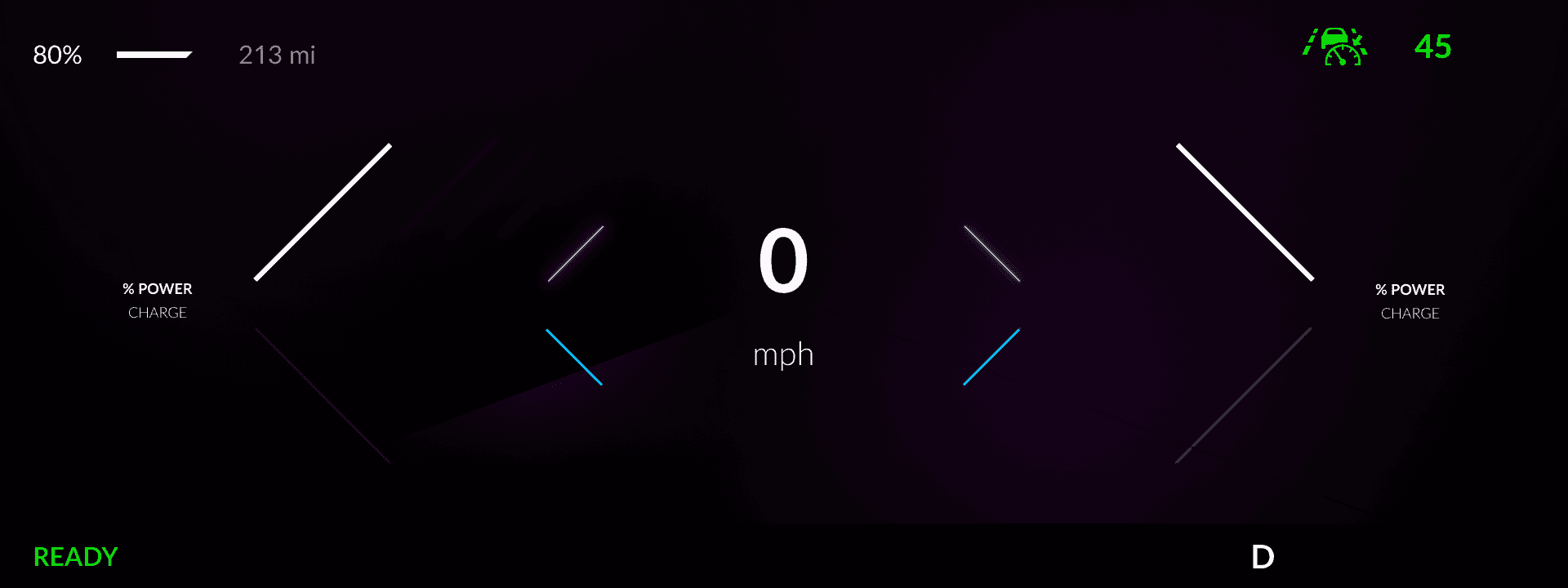
The final interface was crafted with a focus on key driving metrics, such as speed, charge percentage, and power usage. The layout was streamlined, with information positioned for easy access and readability. Interactive elements and subtle animations were introduced to enhance user engagement, ensuring a clean, modern aesthetic while maintaining usability.
Design Token System for Honda and Acura

In collaboration with Honda, we embarked on a six-month pilot project to create a comprehensive design token system. This initiative focused on two primary touchpoints: the Central Information Display (CID) and the Instrument Cluster (IC). The goal was to design a unified yet flexible system that would accommodate both Honda's and Acura’s brand identities while maintaining consistency across shared elements.

Design Tokens

The primary goal was to establish a design token framework that encapsulated both the visual and interactive elements of Honda and Acura. The framework aimed to streamline the design and development processes for both brands, ensuring a cohesive user experience across their respective infotainment systems. By creating a shared system of tokens (such as colors, typography, layout specifications), the design language could be easily scaled and customized according to each brand’s identity.

Taxonomy

We introduced a design token taxonomy to structure and categorize the components of the system. This taxonomy was vital for organizing design tokens in a structured and scalable way. The components were categorized into three main layers:

  1. Global: Tokens that applied across both Honda and Acura (e.g., typography, core colors).

  2. Unique: Brand-specific tokens (e.g., layout, component styles) that reflected the individual identities of each brand.

  3. Fundamental: Essential documentation, including naming conventions, for easy maintenance and clarity.

This taxonomy helped ensure that each token was properly categorized for efficient use and future scalability.
Challenges

While developing this system, we encountered several challenges:

  1. Brand Customization: We had to find the right balance in adapting the tokens to suit the unique needs of both Honda and Acura, while still maintaining an overall consistent design framework.

  2. Component Hierarchy: Clear naming conventions and categorization were necessary for the effective organization of design tokens.

  3. Global vs. Unique Tokens: Striking the right balance between global shared elements (such as typography) and brand-specific components was key to maintaining individuality for both brands.

  4. File Management: Ensuring an organized structure for Figma files and managing version control was crucial to keep the system streamlined.

  5. Cross-Platform Compatibility: Ensuring that design tokens worked seamlessly across different platforms, ensuring consistency in the experience no matter the device.


A well-structured taxonomy was critical to managing the complexity of the design system effectively. It provided clarity in how design tokens were categorized, named, and organized, allowing for better collaboration across teams and enabling future growth of the system.

Design Token Naming Convention

As part of our work with Honda and Acura, we established a design token naming convention to ensure clarity, consistency, and scalability across the system. The naming format follows a structured and hierarchical approach, enabling seamless updates, easy component identification, and efficient collaboration. Below is the format used for naming design tokens:


Naming Format:

[Category] / [Component List] / [Type] / [Variant] / [State] / [Theme]


The design token name for "Actions / Button / Primary / Hover / Dark" would follow the naming convention and look like this:

ACT/Button/Primary/Hover/Dark


Explanation:

  • ACT: Prefix for Actions (representing the category)

  • Button: Component list (button element)

  • Primary: Type (primary style)

  • Hover: State (hover effect)

  • Dark: Theme (dark mode variant)

Outcome

A refined, intuitive HMI that balances aesthetics, usability, and innovation, creating a future-ready experience that stays true to Honda’s philosophy of simplicity and efficiency while maintaining system-wide consistency through design tokens.

Outcome

A refined, intuitive HMI that balances aesthetics, usability, and innovation, creating a future-ready experience that stays true to Honda’s philosophy of simplicity and efficiency while maintaining system-wide consistency through design tokens.

Outcome

A refined, intuitive HMI that balances aesthetics, usability, and innovation, creating a future-ready experience that stays true to Honda’s philosophy of simplicity and efficiency while maintaining system-wide consistency through design tokens.

E.

Currently available for product design roles
and system-driven projects on complex digital products.
If this way of thinking resonates, lets discuss a product.

© Edoardo Sportelli - 2026. Living in Italy, in Fiastra, nestled in the Sibillini Mountains. Like Tuscany, but better. Policy Privacy and Data Protection. No reuse or redistribution without permission.

Thank you for taking a look!

If you'd like to explore more, you can head back to the portfolio page. I look forward to hearing from you.

© Edoardo Sportelli - 2024
Living in Italy, in Fiastra, nestled in the Sibillini Mountains. Like Tuscany, but better.

Policy Privacy and Data Protection.


No reuse or redistribution without permission.

Currently available for product design roles
and system-driven projects on complex digital products.
If this way of thinking resonates, lets discuss a product.

© Edoardo Sportelli - 2026. Living in Italy, in Fiastra, nestled in the Sibillini Mountains. Like Tuscany, but better. Policy Privacy and Data Protection. No reuse or redistribution without permission.